ESOP Taxation in India 2026: You Pay Tax Before You See a Single Rupee — Here's the Full Math
ESOPs in India are taxed twice — once at exercise as salary, and again at sale as capital gains. On a ₹1 crore ESOP, that can mean paying ₹27 lakh before you've sold a single share.
An employee whose ESOPs are worth ₹1 crore can be asked to pay ₹27 lakh upfront, before selling a single share. That is the part of ESOPs nobody explains at the offer-letter stage.
The short version: ESOPs in India are taxed twice. First at exercise, when the difference between fair market value and your exercise price is added to your salary and taxed at slab rates — even though you've received no cash. Then again at sale, as capital gains. For most startup employees, the second tax isn't the problem. The first one is.
And 2026 brought one genuinely good change — plus one that didn't.
Let me walk you through this with real numbers, because that's the only way it makes sense.
First, why ESOPs feel like free money — and aren't
An ESOP is not a gift. It's an option — the right to buy shares later at a price fixed today.
Three dates matter, and mixing them up is where people get hurt:
| Date | What happens |
|---|---|
| Grant | You're given the option. Nothing is taxed. |
| Vesting | Your right to exercise builds up over time. Still nothing taxed. |
| Exercise | You actually pay for the shares. Tax hits here. |
| Sale | You sell. Tax hits again. |
That third row is the one that empties savings accounts.
The day you exercise — and the tax nobody warned you about
When you exercise, the government treats you as having received a perquisite — a benefit in addition to salary.
The formula: Perquisite = (Fair Market Value on exercise date − Exercise price) × Number of shares
That amount is added to your salary for the year and taxed at your slab rate.
Here's the part that catches people. You haven't sold anything. You haven't received any money.
But the tax is due.
This is what professionals call the "dry tax" problem — a tax bill on paper wealth.
How FMV is decided
| Share type | How FMV is determined |
|---|---|
| Listed Indian shares | Average of opening and closing price on exercise date |
| Unlisted / foreign shares | Valuation by a SEBI-registered Category I Merchant Banker; certificate valid 180 days from exercise |
For an unlisted startup — which is most startups — this means a merchant banker valuation. Not a number someone in the finance team typed into a spreadsheet. If you're ever told the FMV was "decided internally," ask questions.
The ₹1 crore question
Let me put real numbers on this, because the gap between "my ESOPs are worth ₹1 crore" and "what lands in my bank" surprises almost everyone.
The setup:
- You have options with an exercise price of ₹10,00,000 in total
- FMV on the exercise date: ₹60,00,000
- Perquisite: ₹50,00,000
- Your income puts you in the 30% slab → with 10% surcharge and 4% cess, effective rate ≈ 34.32%
The upfront cost, before any sale:
| Item | Amount |
|---|---|
| Exercise price you must pay | ₹10,00,000 |
| Perquisite tax | ₹17,16,000 |
| Total cash out of your pocket | ₹27,16,000 |
Read that again. You need to spend ₹27 lakh to unlock something you cannot yet sell.
And if your total income crosses ₹1 crore in that year, the surcharge rises to 15%, pushing the effective rate to about 35.88%.
This is exactly why startup employees — people with good salaries and thin savings — get stuck.
The asset is real. The cash isn't.
Then you sell. And you're taxed again.
Here's the part most people get wrong: your cost of acquisition is the FMV at exercise — not the exercise price you actually paid.
That rule exists for a reason. It stops the same gain from being taxed twice. You already paid perquisite tax on ₹50 lakh, so the capital gains calculation starts from ₹60 lakh, not ₹10 lakh.
The numbers:
- Sale value: ₹1,00,00,000
- Cost of acquisition: ₹60,00,000
- Capital gain: ₹40,00,000
Now, how much tax on that ₹40 lakh depends entirely on three things — listed or unlisted, and how long you held:
| Scenario | Tax on the ₹40 lakh gain | Your net in hand |
|---|---|---|
| Unlisted, held over 24 months (LTCG) | ₹5,00,000 @ 12.5% | ₹67,84,000 |
| Listed, held over 12 months (LTCG) | ₹4,84,375 @ 12.5% above ₹1.25 lakh | ₹68,00,000 |
| Listed, held under 12 months (STCG) | ₹8,00,000 @ 20% | ₹64,84,000 |
| Unlisted, held under 24 months (STCG) | ₹13,72,800 @ slab rate | ₹59,11,200 |
The spread between the best and worst case is nearly ₹9 lakh — on exactly the same shares, at exactly the same sale price.
That difference has nothing to do with how hard you worked. It's entirely about when you sold and whether the shares were listed.
Holding periods to remember
| Share type | Short-term | Long-term |
|---|---|---|
| Listed (STT paid) | ≤ 12 months | > 12 months |
| Unlisted / foreign | ≤ 24 months | > 24 months |
The deferral almost nobody qualifies for
Now the genuinely useful part — and the one that changed in 2026.
Employees of certain startups can postpone the perquisite tax. This was introduced to solve exactly the dry-tax problem I described.
But the eligibility is narrow. You need:
- A DPIIT-recognised startup, and
- An IMB certificate under Section 80-IAC (now Section 140 under the Income Tax Act, 2025)
Both. Not one.
And here's the number that explains why this relief feels invisible: as of 2026, fewer than 2% of DPIIT-recognised startups — roughly 3,700 out of nearly 1.97 lakh — hold the IMB certification.
So most startup employees, even at recognised startups, do not get the deferral [see verification note below]. The company has DPIIT recognition, everyone assumes the ESOP benefit applies, and it doesn't.
What changed in 2026
| Old position (1961 Act) | New position (2025 Act) | |
|---|---|---|
| Provision | Section 192(1C) | Section 392(3) read with Section 289(3) |
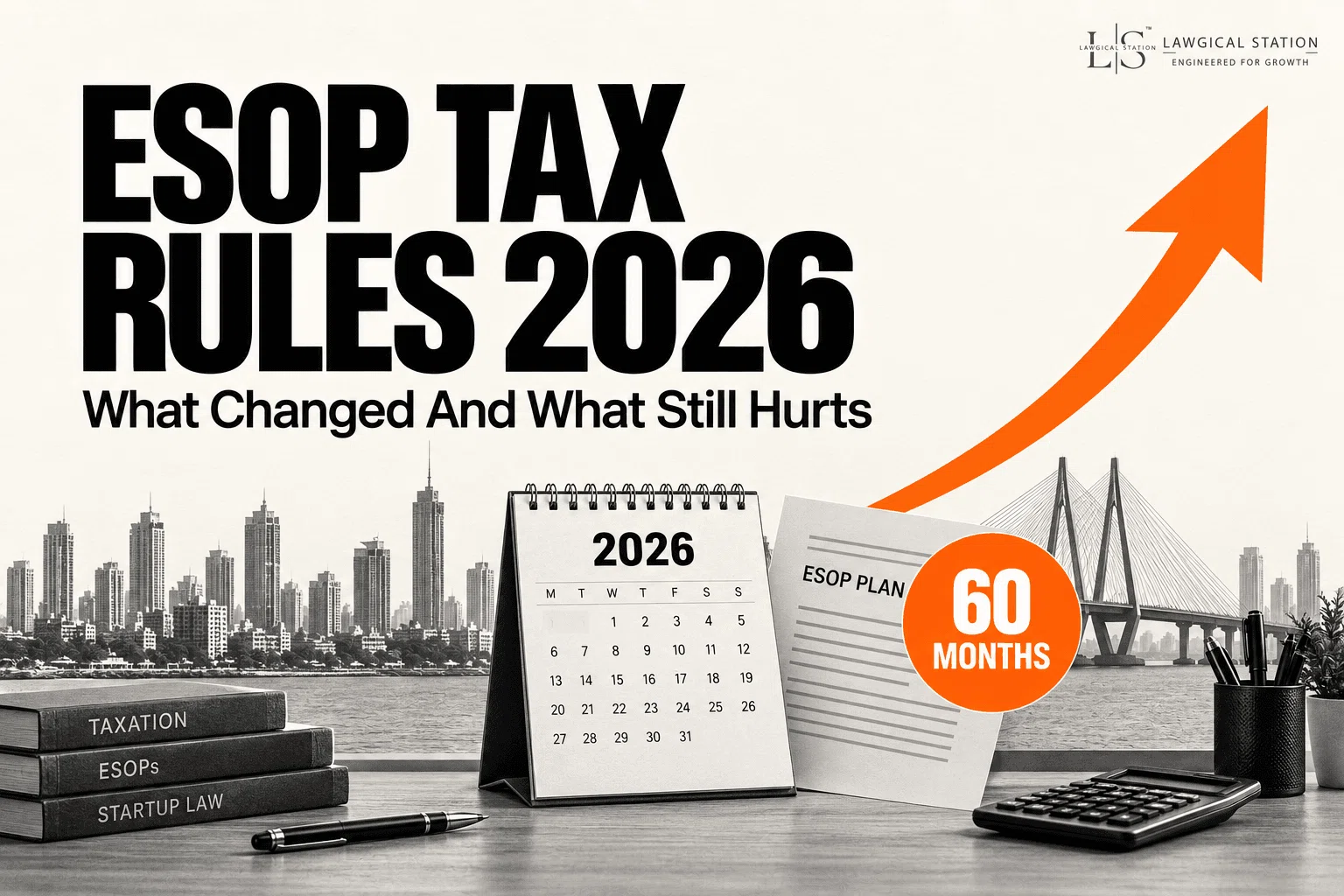
| Deferral window | 48 months from end of the assessment year | 60 months from end of the tax year — for shares allotted on or after 1 April 2026 |
| Triggers | Sale, leaving the company, or 48 months | Sale, leaving the company, or 60 months |
| Salary perquisite provision | Section 17(2)(vi) | Section 17(1)(d) |
| Employer TDS provision | Section 192 | Section 392 |
| Form 16 | Form 16 | Form 130 |
An extra year of breathing room. Not huge on paper, but for someone sitting on illiquid shares, twelve more months can be the difference between a manageable tax bill and a loan. ** Three things to understand about the deferral**:
- It's a postponement, not an exemption. The tax is still owed. It's calculated at the rates applicable in the year of exercise, not the year you finally pay.
- The 60 months runs from the end of the tax year in which shares were allotted — not simply five years from your exercise date. The arithmetic matters.
- Your employer still has to compute and track the liability. The deferral postpones the employee's payment, not the company's obligation. Finance teams that don't understand this create problems for themselves later.
If you're an employee and your company claims the deferral applies, ask one question: Are we IMB certified under Section 140? The answer tells you everything.
A 2026 ruling that made employees' lives easier
In August 2026, the Bengaluru ITAT delivered a ruling in the case of a former Flipkart employee whose buyback payout of ₹2.33 crore had been taxed as salary.
The facts matter here, so read carefully.
The employee held vested but unexercised options. Under a buyback, the company repurchased those options directly — no shares were ever allotted.
The Tribunal held:
- Salary-perquisite taxation applies only when options are actually exercised and shares allotted
- Until exercise, a vested option is only a right to acquire shares — a capital asset
- The buyback of that right is a transfer, so the gain is taxed as capital gains, not salary
- And crucially: what appears in Form 16 or Form 26AS does not decide the character of the income. The Act does.
Why this matters: capital gains treatment can be meaningfully lighter than slab-rate salary taxation. For employees receiving payouts in buybacks, secondary sales or acquisitions, this opens a legitimate planning position.
Two honest caveats:
- An ITAT ruling is persuasive, not binding. The department can appeal. This is a position, not settled law.
- It turns on the specific fact that the options were never exercised. If you exercised and were allotted shares, the normal two-stage treatment applies.
A similar view has been taken in a Karnataka High Court ruling on when salary taxation arises. The direction of travel is employee-friendly — but for anything of real value, get it reviewed by a professional before you rely on it.
For founders: the pool decision you can't easily undo
Employees feel this tax. Founders design it. And a few decisions made in year one follow you for a decade.
How big should the pool be?
| Stage | Typical ESOP pool (fully diluted) |
|---|---|
| Pre-seed / Seed | 8–12% |
| Series A | 12–15% |
| Later stage | 15–20% |
A few practical observations from watching this play out:
- Pools below 7% almost always force a founder-dilutive top-up mid-round
- Pools above 18% before Series A invite investor demands for a re-cut
- Reserve around 40% of the pool for future hires. Granting 60% to your first ten employees is a classic early mistake
- Size for the team you'll have in 18–24 months, not the team you have today
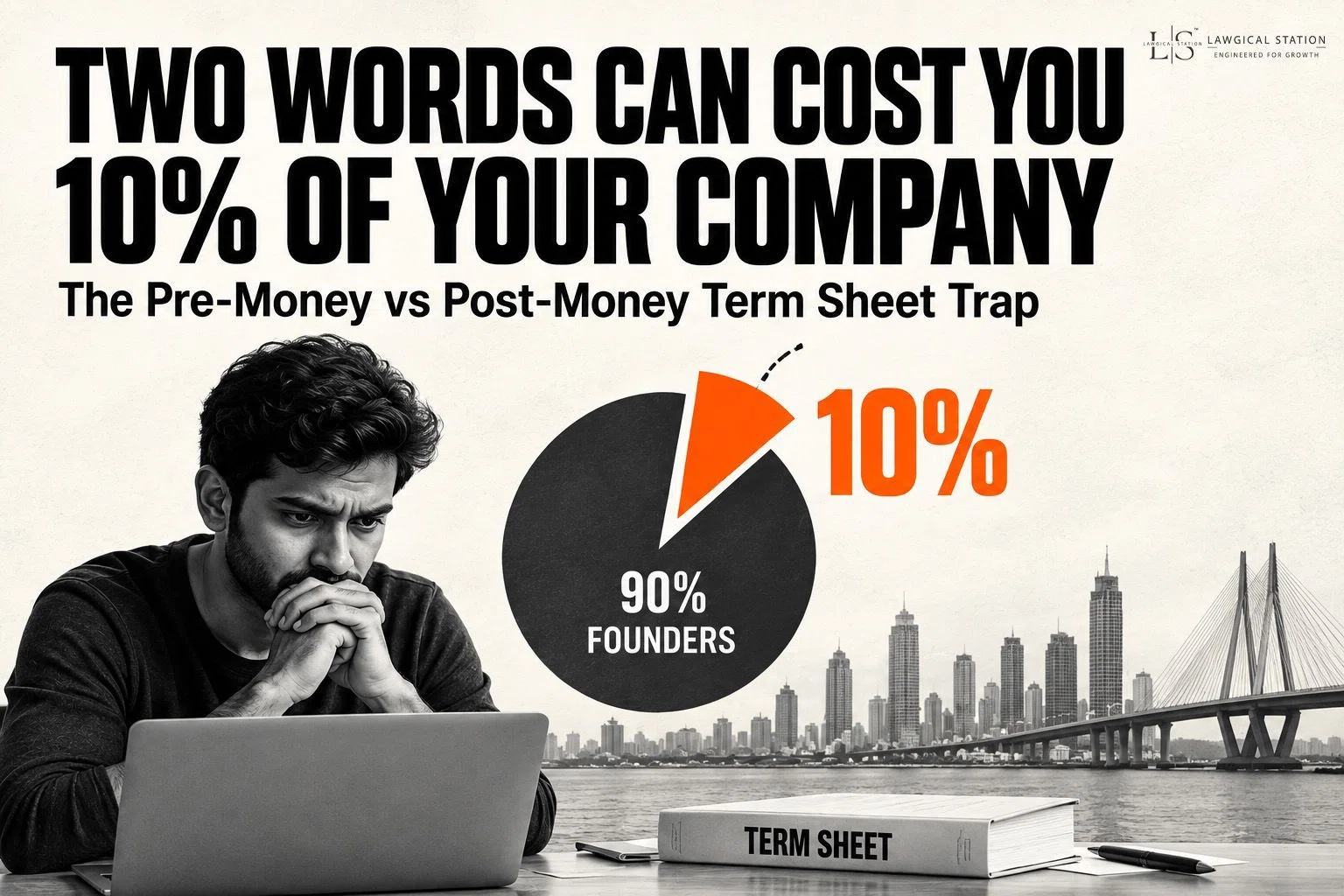
Pre-money vs post-money — the expensive detail
This one costs founders real money, and it's decided at the term sheet.
| ESOP pool | Who absorbs the dilution |
|---|---|
| ESOP pool carved out of pre-money | Founders alone. The investor's stake sits on top, untouched |
| ESOP pool created post-money | Shared by everyone, including the investor |
A pre-money pool is standard in India, which means founders carry it. That's not necessarily wrong — but you should know you're paying for it, and negotiate accordingly.
Vesting: the standard everyone uses for a reason
Four years, with a one-year cliff.
- Months 0–12: Nothing vests
- Month 12: 25% vests in one tranche
- Months 13–48: The remaining 75% vests in equal monthly instalments
The cliff exists so that someone who leaves after four months doesn't walk away with equity. Indian law requires a minimum one-year gap between grant and vesting.
Two refinements worth knowing:
- Five-year vesting is increasingly used for senior leadership
- Double-trigger acceleration (change of control and termination) is preferred over single-trigger — it's more acquirer-friendly and more common in practice
The compliance you can't skip
- Section 62(1)(b), Companies Act 2013, read with Rule 12 of the Companies (Share Capital and Debentures) Rules
- Special resolution at a general meeting
- Form MGT-14 within 30 days
- Register of Employee Stock Options (Form SH-6), maintained properly
Where DPIIT-recognised startups get a genuine relaxation: they can grant ESOPs to promoters and directors holding more than 10% — normally not permitted. Useful for founders who've taken a low salary and want to build equity the same way employees do.
And one point founders often miss: the ESOP discount is generally allowable as a business deduction for the company in the year the employee is taxed on it. You're not just creating an employee benefit — you're creating an expense. Model it.
The market reality, in numbers
ESOPs in India are no longer a fringe benefit. They're a wealth-building instrument — but an uneven one.
| What happened | The number |
|---|---|
| ESOP liquidity in FY26 | $423 million across 27 programmes — up ~70% from $248 million in FY25 |
| But | Fewer companies participated. The wealth is concentrating |
| Flipkart buybacks | 6+ since 2017, over $1.5 billion; August 2026 window at ₹713.4 per option |
| Swiggy's 2024 IPO | ~$1 billion unlocked for 5,000+ employees; 500 crossed ₹1 crore |
| Zomato, Nykaa, Policybazaar, Paytm listings | Together added ~$3.3 billion in employee wealth |
| Indian startup employees, 3-year total | ~₹12,000 crore ($1.5 billion) through ESOP liquidity |
| 2023 buybacks | A record ₹7,098 crore returned to employees |
| Pre-IPO startups FY 2024–25 | Over ₹1,450 crore for 3,000+ employees |
One comparison worth sitting with: HDFC Bank alone created ₹5,282 crore in ESOP liquidity in 2024 — more than double the combined buybacks of all Series B+ startups that year.
The honest lesson? Startup ESOPs carry higher upside and higher risk. A listed company's ESOP is closer to deferred salary. A seed-stage startup's ESOP is a bet — sometimes a very good one, sometimes worth nothing.
Know which one you're holding before you count it.
Also worth noting: in June 2025, SEBI allowed founders holding ESOPs granted at least one year before filing the DRHP to retain and exercise them after the IPO. Founders are no longer forced to surrender equity on the way to listing.
One thing that didn't happen in 2026
The Union Budget 2026-27, presented on 1 February 2026, did not deliver the ESOP reform startups had been asking for.
Going in, there was real expectation that the four-year deferral — available to only about 4,000 IMB-certified startups — would be extended to all DPIIT-recognised startups. That's roughly 1.97 lakh companies.
It wasn't done. Startups made their disappointment clear publicly.
The broader asks remain on the table: defer perquisite tax until actual liquidity, end the double taxation, clarify cross-border ESOP apportionment, and allow pro-rata taxation for employees who worked partly outside India.
If you're an employee waiting for relief before exercising, don't plan around an announcement that hasn't come. Plan around the law as it stands.
Mistakes I see people make
Employees:
- Not budgeting cash for the exercise price and the tax together. Most people plan for one and get hit by the other
- Assuming the deferral applies because the company is DPIIT recognised. It needs IMB certification too
- Exercising everything at once when staggering across two financial years would have kept them in a lower slab
- Forgetting the FMV valuation certificate is valid only 180 days
- For NRIs and holders of foreign RSUs: missing Schedule FA disclosure. Penalties can reach ₹10 lakh per year under the Black Money Act — and holding foreign shares means ITR-1 and ITR-4 aren't available to you
Founders:
- Sizing the pool for today's team
- Not modelling pre-money vs post-money before signing the term sheet
- Leaving the buyback clause out of the scheme
- Letting the ESOP scheme, grant letters, cap table and Form SH-6 tell four different stories. That's exactly what due diligence finds
- Not updating ESOP documents for the new section numbers — grant letters still citing Section 192(1C) and Section 80-IAC will cause confusion at the worst possible time
Frequently asked questions
Are ESOPs taxed twice in India?
Yes. Once as a perquisite at exercise, at slab rates. Again as capital gains when you sell. The FMV at exercise becomes your cost of acquisition, which prevents the same amount from being taxed twice — but there are genuinely two tax events.
I haven't sold anything. Why do I have tax to pay?
Because the law taxes the benefit at exercise, not at sale. The difference between FMV and your exercise price is treated as salary in that year. This is the dry-tax problem, and it's the single biggest ESOP complaint in India.
Can I avoid the perquisite tax?
You can defer it if your employer is both DPIIT recognised and IMB certified under Section 140. Otherwise, no. Timing the exercise across financial years can reduce the rate — but it doesn't remove the tax.
What is the ESOP tax deferral in 2026?
For shares allotted on or after 1 April 2026, tax becomes payable at the earliest of: 60 months from the end of the tax year of allotment, the date you sell, or the date you leave the company. This replaced the earlier 48-month window.
What is my cost of acquisition when I sell?
The FMV on your exercise date — not the exercise price you paid. Higher cost means lower taxable gain.
How long must I hold for long-term treatment?
12 months for listed shares, 24 months for unlisted or foreign shares.
Are ESOPs from my foreign parent company taxed the same way?
No. Foreign shares are treated as unlisted because no STT is paid, so the ₹1.25 lakh LTCG exemption doesn't apply. The deferral also applies to options in the issuing entity — so an Indian subsidiary's employees generally don't qualify unless the Indian entity itself is IMB certified. DTAA relief may be available via Form 67.
Is ESOP buyback taxed as salary or capital gains?
A 2026 Bengaluru ITAT ruling held that buyback of vested but unexercised options is capital gains, not salary — because no shares were allotted. It's persuasive, not binding, and fact-specific. Get it reviewed.
Is the ESOP discount deductible for my company?
Generally yes, as a business expense in the year the employee is taxed. Confirm the timing with your CA.
My honest take
ESOPs are a good idea badly explained. Almost every problem in this article traces back to one thing: nobody sat the employee down at grant time and showed them the cash-flow reality.
A founder shows a candidate a spreadsheet with a big number. The candidate imagines a house.
Two years later they're asked for ₹27 lakh they don't have, on shares they can't sell, and the goodwill built over those two years evaporates in one conversation.
That's avoidable. Show the perquisite math at grant. Show the exercise cost. Explain the holding period. Tell them honestly whether the company is IMB certified. If it isn't, say so plainly — an employee who understands the rules is far less bitter than one who finds out at the worst moment.
For employees, three things:
- Understand that these are two separate tax events. Budget for both, not one.
- Know your holding period. The difference between selling in month 11 and month 13 can be several lakh rupees — for doing nothing except waiting.
- And don't count paper wealth as real. ESOPs are a bet with a genuine chance of paying off, and a genuine chance of not. Both are normal. Plan for the second while hoping for the first.
The people who do well out of ESOPs aren't the ones with the biggest grants. They're the ones who understood the rules before they signed.
This article is for general information and reflects the position as of September 2026. Tax provisions change, and some provisions referenced here are recent. Please verify current law or consult a professional before taking any decision based on it.
The Lawgical Station team brings together CAs, CSs and tax specialists with decades of combined experience advising founders, SMEs and professionals on tax, compliance and business structuring across India.