Global Food Crisis 2026: What It Means for Indian Families, EMIs and Food Businesses
Global food prices are rising while India's food inflation and loan rates climb. Here's what the 2026 food crisis could mean for Indian families, EMIs, investments and food businesses.
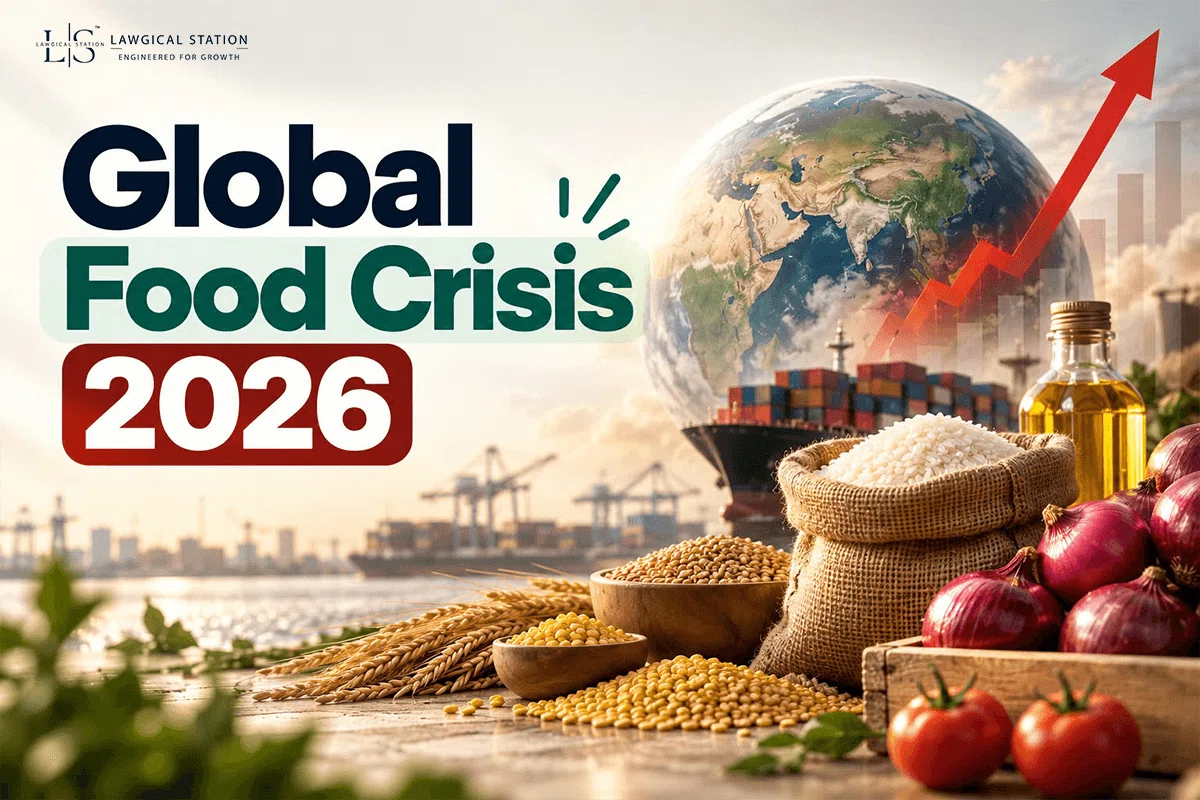
India's godowns are full of rice and wheat. Your onion is up 48%. And on 7 October the RBI raised your loan rates. All three are happening in the same week, and they are connected.
The short version
- Global food prices rose for a third straight month in September. The UN's FAO index hit 136, the highest since November 2022.
- Jaishankar warned on 29 September of "a major food crisis probably" in the coming months. He blamed food, fuel, fertiliser and finance together.
- India is safe on rice and wheat for now. It is exposed on fertiliser, edible oil and pulses.
- Food inflation in India was 5.95% in August. The RBI now expects overall inflation of 5.2% for this financial year and has raised the repo rate to 5.50%.
- The pressure lands on three groups: middle-class budgets, loan EMIs and food businesses.
What is actually happening globally
| Indicator | Latest | Source |
|---|---|---|
| FAO Food Price Index, Sept 2026 | 136.0, up 1.5% on August and 5.8% on last year | FAO, 2 Oct 2026 |
| Highest since | November 2022 | FAO |
| Cereals, Sept | Up 5.1% (wheat 6.3%, maize 5.6%, rice 1.4%) | FAO via Global Agriculture |
| Sugar, Sept | Up 6.1% in a month, 14.7% on last year | FAO via Finshots |
| FAO 2026 cereal output forecast | About 2.9 billion tonnes, only 2.1% below last year's record | FAO via Finshots |
Two honest points. The index is still well below the roughly 160 peak of March 2022. And the world is not short of grain. The trouble is cost, transport and inputs.
Why it's happening: the "4F" problem
Jaishankar's phrase at the UN was food, fuel, fertiliser and finance. Here is what each means.
- Fuel. Brent crude was back at $100 a barrel this week after fresh attacks on tankers, and the RBI Governor flagged the West Asia re-escalation in September.
- Fertiliser. A few countries make most of it. When Hormuz was disrupted, about one-third of seaborne fertiliser trade was put at risk (Carnegie, via Finshots). The WTO estimates export restrictions touched up to 15% of global fertiliser exports. Less fertiliser now means smaller harvests later, into 2027.
- Grain routes. Black Sea disruptions are a big reason wheat rose 6.3% in September.
- Finance. Food and fuel are priced in dollars. The rupee was around ₹96.45 to the dollar on 7 October, so every imported tonne costs more rupees.
- El Niño. NOAA puts the chance of a very strong El Niño this winter at over 90% (via Finshots). India's Finance Ministry expects it to peak in late 2026 and last to March 2027.
Who has warned, and what they said
| Who | Warning | Date |
|---|---|---|
| S. Jaishankar, External Affairs Minister | A major food crisis is likely in the coming months (grain, fertiliser, El Niño) | 29 Sep 2026 |
| Máximo Torero, FAO Chief Economist | Wars plus El Niño make a "perfect storm"; prices usually take 3 to 6 months to reach shoppers | Aug 2026 |
| FAO Director-General | Hormuz fertiliser disruption will cut crop yields and tighten supply into 2027 | May 2026 |
| Finance Ministry, Monthly Economic Review | High food inflation can squeeze other household spending; El Niño risk to the Rabi crop | Aug and Oct 2026 |
| RBI Governor | A weak monsoon plus strong El Niño may hurt the Rabi season | 7 Oct 2026 |
| USDA (US) | Launched a $500 million fertiliser-production programme, calling food security national security | 1 Jul 2026 |
India: strong in the godown, weak in the inputs
India produced a record 376 million tonnes of foodgrain in 2025-26, and about 81 crore people get subsidised grain. Rice and wheat stocks with FCI and state agencies were 817.53 lakh tonnes at the end of April 2026, per the Finance Ministry.
But India still imports a large share of its fertiliser, fuel and edible oil. Nitrogen fertiliser imports rose 52% in the first half of 2026 as India found new suppliers (IFPRI via Finshots). That is why prices can rise even with full godowns.
What's already showing up in your market (CPI, August 2026)
| Item | Year-on-year |
|---|---|
| Headline CPI | 4.82% (July 4.45%, January 2.74%) |
| Food | 5.95% |
| Rural food / urban food | 6.13% / 5.64% |
| Ginger | +73.82% |
| Onion | +48.27% |
| Garlic | +43.60% |
| Tomato | -31.09% |
| Potato | -13.14% |
Source: MoSPI, via BusinessToday and Finnovate.
Food is about 39% of the CPI basket, so this matters. September's number is due on 12 October. An industry tracker also notes a 14.7% monsoon deficit and a 1.4% fall in kharif sowing.
Impact 1: the middle-class kitchen (an illustration, not a forecast)
Take a family spending ₹25,000 a month on food.
- At the 5.95% food inflation rate, that is about ₹1,490 more a month, or ₹17,850 a year.
- If that ₹1,500 a month had gone into a SIP earning 12% for 20 years, it would grow to about ₹14.8 lakh. The 12% is an assumption, and markets do not promise it.
The Finance Ministry has warned this squeeze may cut spending on non-food items. The first thing families cut is the SIP. Pause it for a year and the long-run cost is bigger than the grocery bill that caused it.
Impact 2: your EMI
Governor Malhotra raised the repo rate to 5.50% and changed the stance to "calibrated tightening". He said rate cuts are off the table. The RBI now sees inflation of 4.9% in July-September, 6.0% in October-December and 5.7% in January-March. GDP growth is forecast at 7.1%.
If your lender passes on the full 25 bps on a 20-year loan at an illustrative 9.00%:
| Loan | EMI at 9.00% | EMI at 9.25% | Extra a month | Extra a year |
|---|---|---|---|---|
| ₹50 lakh | ₹44,986 | ₹45,793 | ₹807 | ₹9,685 |
| ₹75 lakh | ₹67,479 | ₹68,690 | ₹1,211 | ₹14,527 |
| ₹1 crore | ₹89,973 | ₹91,587 | ₹1,614 | ₹19,369 |
My calculation. Your rate, reset date and whether the bank raises the EMI or the tenure will differ. Goldman Sachs and SBI Research had expected a second 25 bps hike in December, but that is their forecast, not a decision.
So a family could be hit twice in the same quarter: about ₹1,500 more on food and ₹800 to ₹1,600 more on the EMI.
Impact 3: food businesses
A restaurant, cloud kitchen, caterer or packaged-food unit feels this first. Take ₹10 lakh of monthly sales with ingredients at 35% of revenue.
| If ingredient costs rise | Extra cost a month | Margin hit | Extra cost a year |
|---|---|---|---|
| 5% | ₹17,500 | 1.75 points | ₹2.1 lakh |
| 10% | ₹35,000 | 3.5 points | ₹4.2 lakh |
| 15% | ₹52,500 | 5.25 points | ₹6.3 lakh |
Illustration only. Restaurant and accommodation prices in the CPI were already rising in August.
What owners can do:
- Recost your top 10 dishes this week, not at quarter-end.
- Revise menu prices in small, planned steps.
- Check the GST on your sales and inputs when you reprice, so a rise in cost does not turn into a compliance mistake.
- Model a loan-rate rise into your cash flow, especially if you hold a working-capital limit.
- Talk to key suppliers about fixed-price or advance purchase for non-perishables.
Impact 4: investments
I won't tell you what to buy. Here is what changed.
- The rate hike makes new fixed deposits potentially more attractive, because banks may reprice deposits upward.
- Rate-sensitive stocks such as auto and realty dipped on the day. Banks rose. One day's move proves nothing.
- Inflation of 5% or more erodes savings that earn less than that, so check your real return.
- Keep your emergency fund in something safe. Food shocks cause cash-flow shocks first.
What to watch
- 12 October: September CPI.
- 6 November: the FAO index for October.
- December: the next RBI meeting.
- Rabi sowing and El Niño: the biggest swing factor for 2027.
A simple checklist
- Do not pause your SIP before cutting other spending.
- Check whether your home loan is repo-linked and when it resets.
- Build or top up an emergency fund of 6 months of expenses.
- Business owners: recost, reprice and recheck cash flow now.
- Track one number a month: your own grocery bill.
FAQs
Is there a global food crisis in 2026?
Prices are rising, not grain running out. The FAO index is at a near four-year high, but global cereal output is only 2.1% below last year's record.
Will India run out of food?
Not in the near term. Rice and wheat stocks are large and about 81 crore people get subsidised grain. The risks are fertiliser, edible oil, pulses and a bad Rabi crop.
What did Jaishankar say?
At the UN he flagged a "4F" crisis of food, fuel, fertiliser and finance, and warned of a major food crisis in the coming months.
What is El Niño and why does it matter?
A warming of Pacific waters that can weaken India's monsoon. The Finance Ministry expects it to peak in late 2026.
Will my EMI go up?
If it is floating-rate and repo-linked, likely yes. The RBI raised the repo rate by 0.25 percentage points on 7 October.
Why is onion up but tomato down?
Vegetables move on their own supply cycles. In August onion was up 48.27% while tomato was down 31.09%.
Should I stop my SIP?
Stopping it is usually the costliest response. Cut discretionary spending first and speak to an adviser.
How does this hit restaurants?
Through ingredient costs. Every 10% rise on a 35% ingredient share costs about 3.5 points of margin.
What did the US do?
Washington announced a $500 million programme to expand domestic fertiliser production. I found no US forecast of a global food crisis.
My honest take
This is not a story about empty shelves. It is about money. The grocery bill, the EMI and the business margin are all moving the same way at once. The families and owners who cope are the ones who see the connection early and plan for it.
This article is general information, not investment or tax advice. Position as of 8 October 2026. Figures change with each data release.
The Lawgical Station team brings together CAs, CSs and tax specialists with decades of combined experience advising founders, SMEs and professionals on tax, compliance and business structuring across India.